From classroom to real-world confidence
- Support many students without increasing faculty workload
- Ensure consistent evaluation across all students
- Reduce student's practice shock and drop out rates

The Challenge: Bridging Theory and Reality
Students were academically prepared—but not emotionally or practically ready for real interactions with patients or users.
Common issues included:
- Anxiety in difficult conversations
- Lack of exposure to realistic scenarios
- Limited individual feedback in training
Traditional role-play fell short:
- Felt scripted and predictable
- Depended heavily on instructor time
- Difficult to scale across large cohorts
"I find it challenging in conversations. Even if you are very supportive of the person and show that you are there for them, they (patients) may still be dismissive and have difficulty opening up." — Nursing student, OsloMet
76% of students would like more communication training and practice.
Inside the learning experience with Variment
Scenario: A patient with deteriorating health who is reluctant to receive home care services.

Instructor designed the patient case which we turned into an AI avatar.
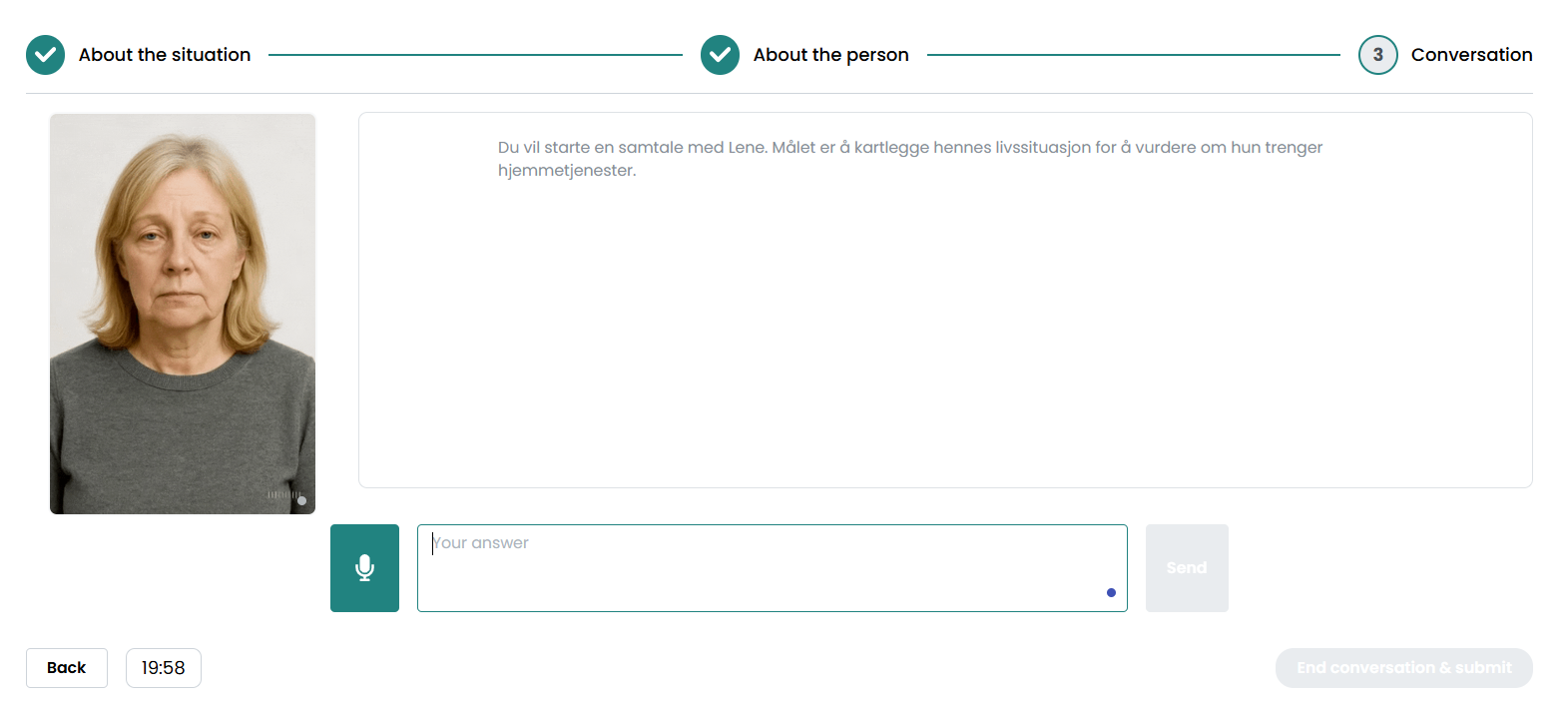
Students completed the simulation in their own time.
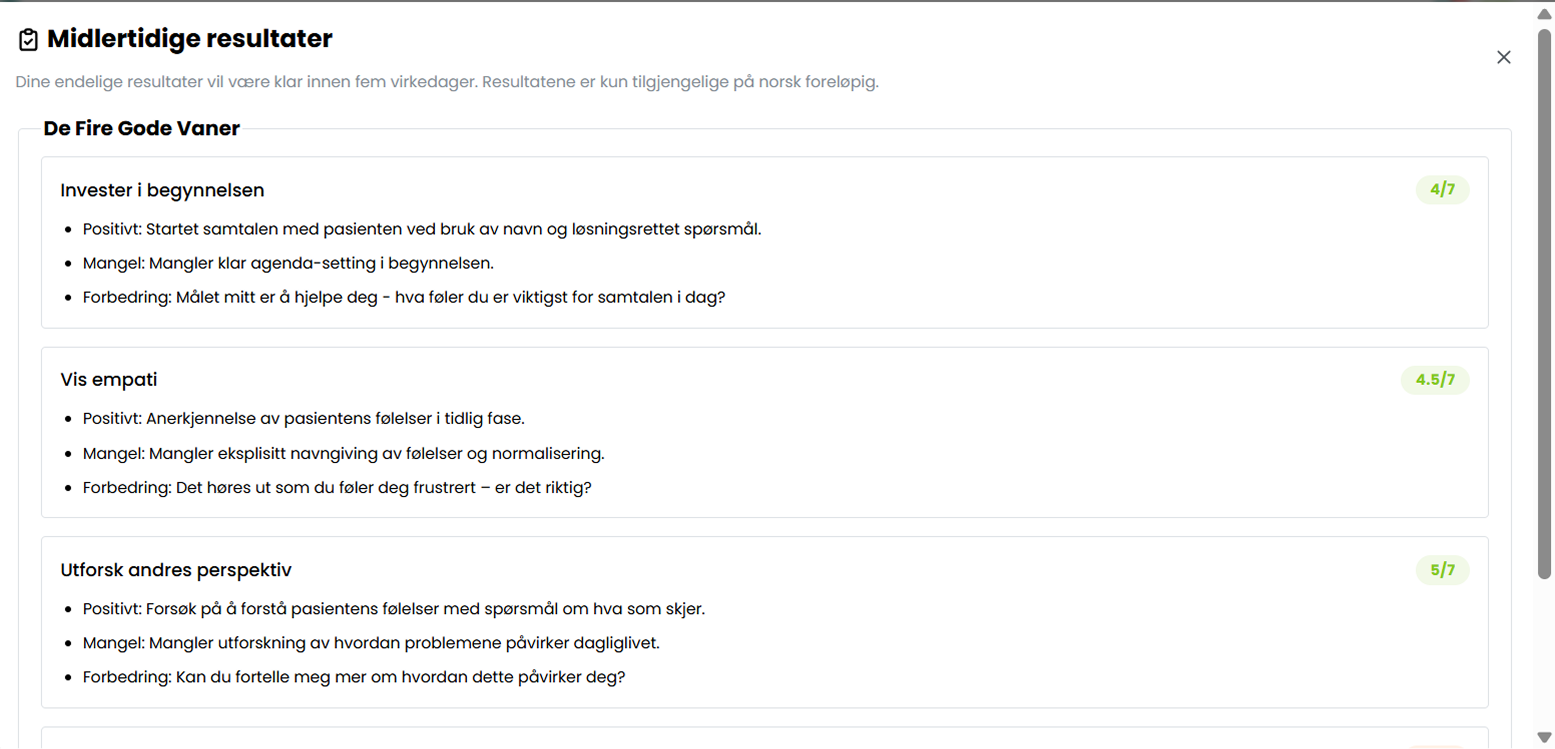
Students received feedback and reflected upon their communication styles and needs for further training.
Before v.s After
Before
- Theoretical understanding
- Limited role play
- Anxiety before placement
After
- Practical exposure
- Unlimited simulation training
- Preparedness and confidence