From Conflict to Confidence
- Improve staff confidence and care quality
- Provide training at scale while reducing time and costs
- Lower sick leave and turnover among employees

The Challenge: Communication Under Pressure
Health and social care staff are facing increasing pressure in emotionally charged situations—dealing with distressed patients, users, difficult relatives, and time constraints.
1 out of 3 sick leave in healthcare and social services is job related.
42% experience high emotional demands at work.
Only 57% said that they have received communication training.
88% of staff would like more communication training.
Inside the learning experience with Variment
Scenario: A distressed resident with PTSD who has struggled to find a stable job.

Manager shares the simulation with staff.
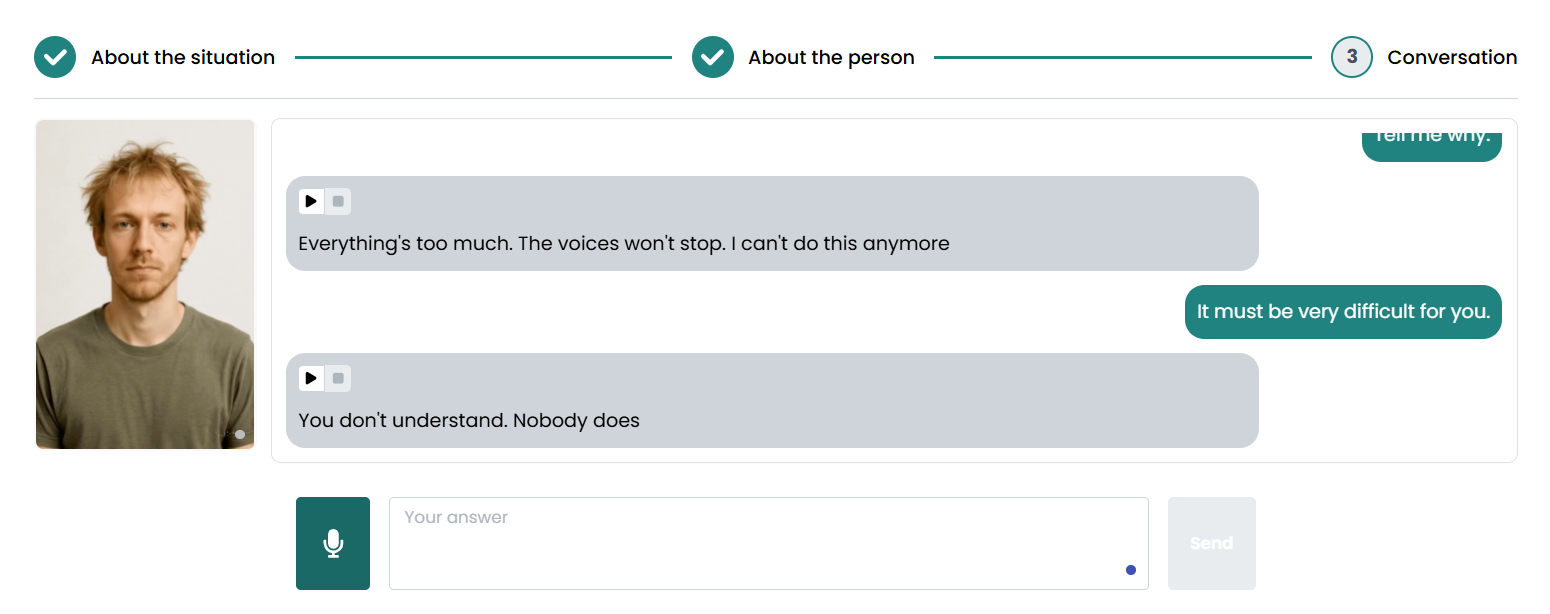
Staff completed the simulation in their own time.
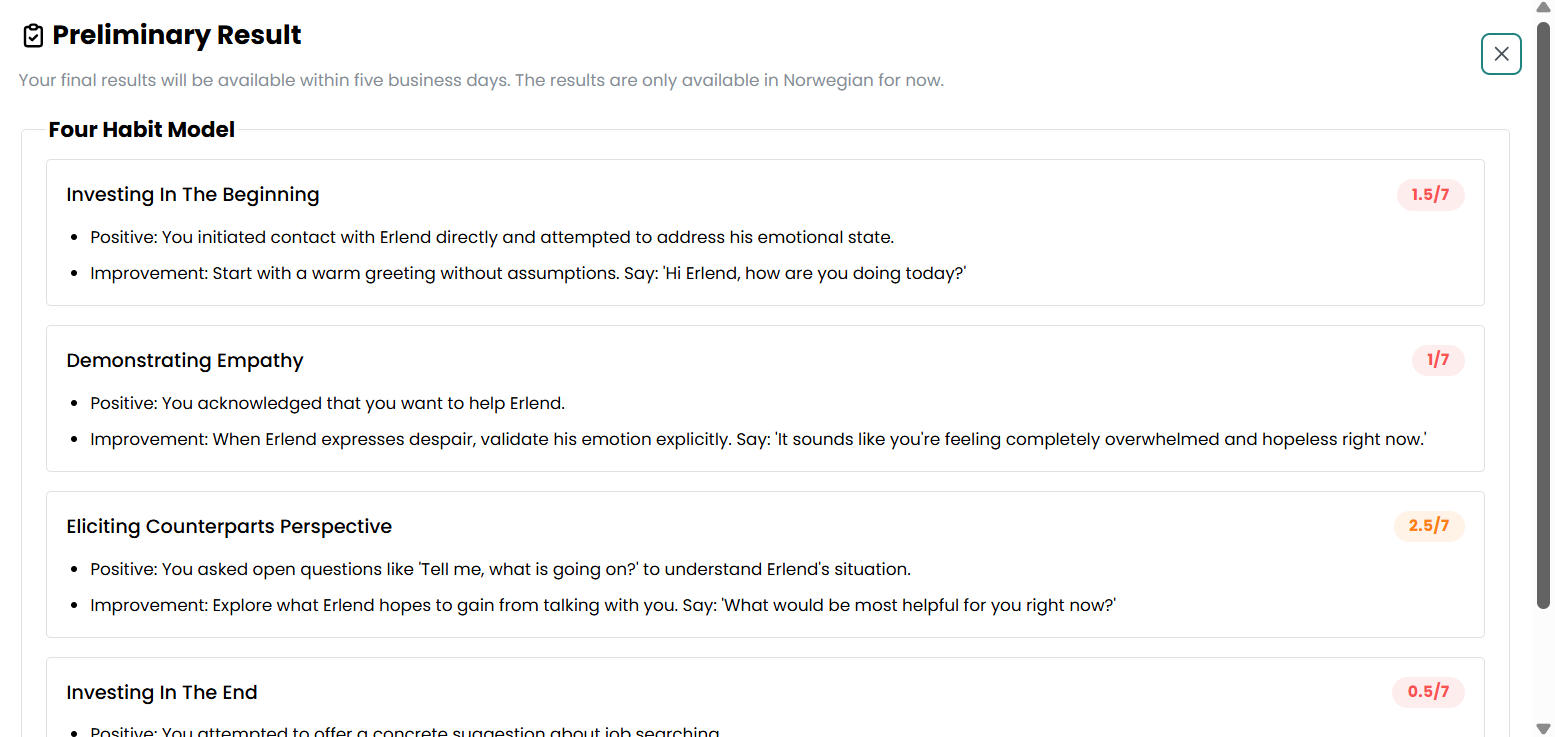
Staff received individual feedback and suggestions for further improvements.
Effect of simulation training
Research has shown that simulation-based training can improve collaboration, self-esteem, and stress management skills, contributing to reducing sick leave. (Schram et al, 2024).
Over 5x return
5.9 working hours gained for every hour spent on training
Reduce sick leave and costs
For a workplace with 100 employees, you can save over 1 million EUR annually.